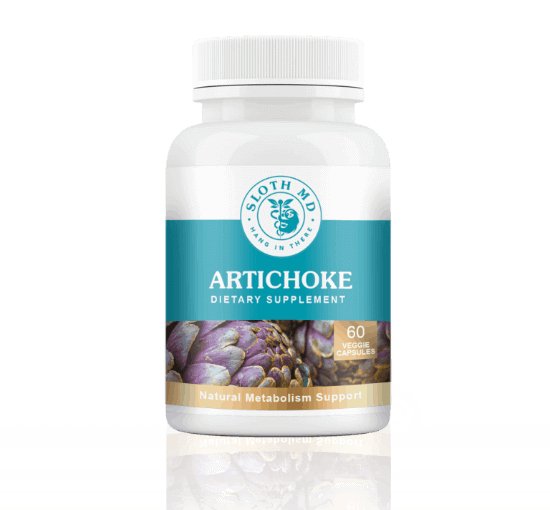
Artichoke (Cynara scolymus) leaf extract is one of the few herbal remedies for which the clinical and experimental trials have complemented each other. C. scolymus exhibits CHOLERETIC properties – increases bile secretion, inhibits inflammation and ROS, improves liver function, gut microbiota, enhances lipolysis and lipid metabolism, and reduces blood glucose in preclinical and clinical studies.
The artichoke leaves contain a number of phenolic acids, flavonoids (rutin, luteolin), cynarin and sesquiterpenes (especially caryophyllene and beta-selinene). It also contains tannins, sugar substances, inulin, mucus substances, phytosterols (taraxasterol), essential oil, provitamin A and several enzymes.
The efficacy on indigestion has been well documented. Due to choleretic activity, by modulating bile synthesis, artichoke is widely used and recommended for the treatment of indigestion or dyspepsia, especially when the cause may be attributed to slow bile duct flow or disorder in the assimilation of fat.
The efficacious hypolipidemic effect (effects on high cholesterol), published in many studies, is due to cynarin and luteolin components in synergy with flavonoids that play a crucial role in inhibiting cholesterol and triglyceride synthesis by modulation of HMG-CoA reductase activity, rather than a true inhibition as exhibited with statin medications. An additional mechanism is through increasing cholesterol fecal excretion due to effects on bile acid production. High LDL levels,
together with high cholesterol and triglyceride levels, are a risk factor for various degenerative vascular diseases, and in particular for arteriosclerosis. Artichoke is shown to modify cholesterol levels, including total cholesterol, triglycerides, LDL cholesterol, and LDL/HDL ratio, without affecting HDL levels.
The hepatoprotective effect of Cynara extract is reported to reduce cholesterol biosynthesis and the oxidation of LDL. Artichoke has been found to decrease the production of reactive oxygen species, the oxidation of low-density lipoproteins, lipid peroxidation, and protein oxidation, and increase the activity of glutathione peroxidase; therefore, it protects liver cells.
Current studies suggest that extracts from leaves of Cynara scolymus have been discovered to help with metabolic disorders (hyperglycemia, inflammatory disorders and abnormal lipid profiles).